The owner's library
Practical reading for the trades
Guides, templates, research and straight numbers for people who run AC, plumbing and electrical companies.
Guides
How to find your true answer rateHow AC companies can fill the shoulder seasonA better water heater follow-up for plumbersHow electricians can start the panel upgrade conversationHow fast should you call a new lead?Read your lead costs correctlyClean up your customer list in five stepsFollow up on estimates without being a pestCut no-shows before the truck rollsWhat a good booking call sounds likeChoosing after-hours coverage, including AIBuild a heat wave and freeze plan before you need itFive signs your dispatcher needs backupStop losing maintenance plan renewalsCalling your own customers: the basicsExplaining the refrigerant change to homeowners
White papers and playbooks
Staffing
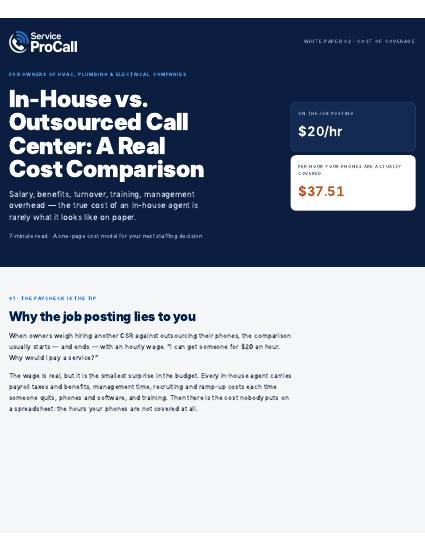
In-House vs. Outsourced Call Center
What coverage really costs, side by side.
Phones
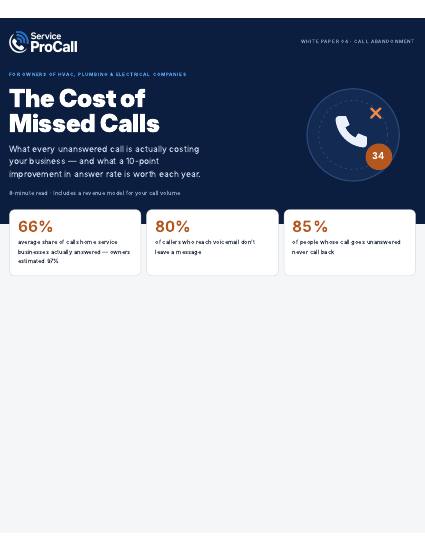
The Cost of Missed Calls
The gap between calls you think you answer and calls you do.
Read the PDF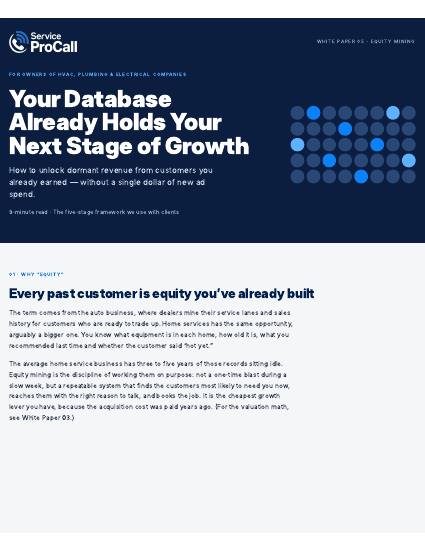
Database
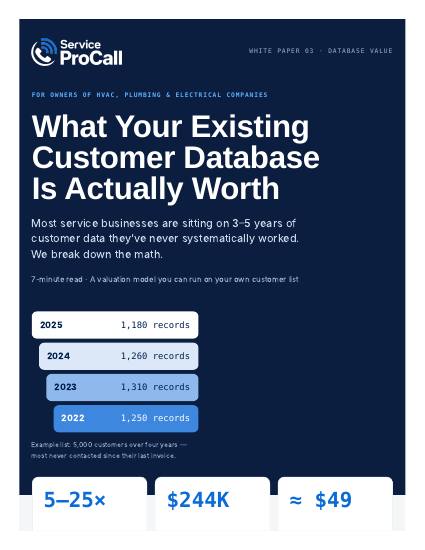
Your Database Already Holds Your Next Stage of Growth
How equity mining turns past customers into a pipeline.
Read the PDF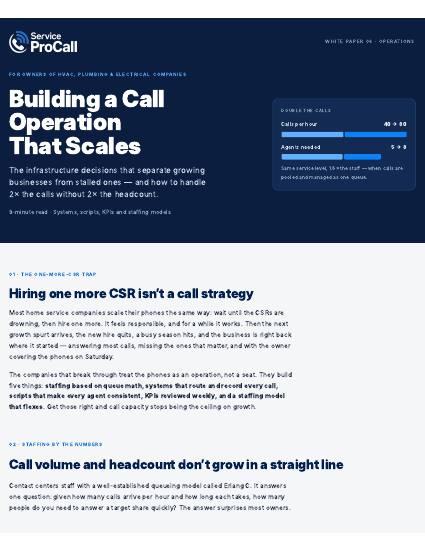
Staffing
Building a Call Operation That Scales
Systems, scripts, KPIs and staffing to handle twice the calls.
Read the PDF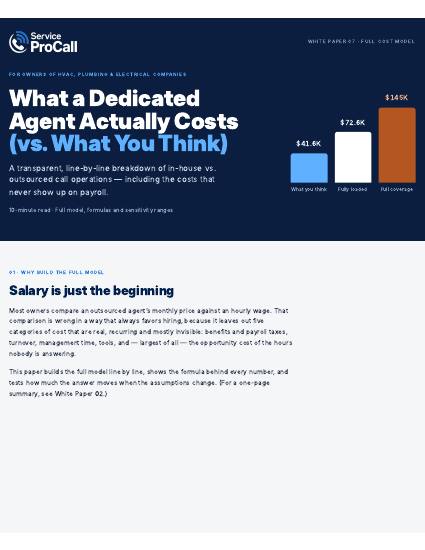
Staffing
What a Dedicated Agent Actually Costs
The fully loaded cost of one in-house seat.
Seasons
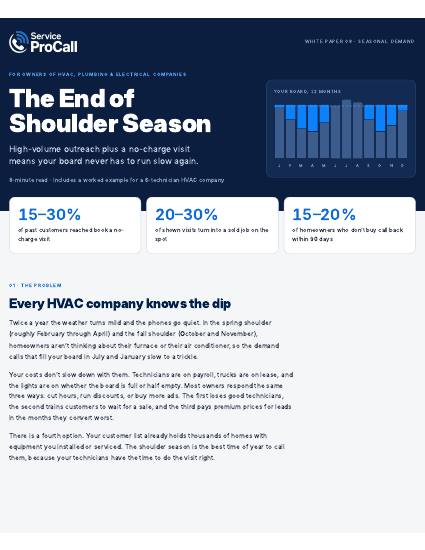
The End of Shoulder Season
Filling the board in the months demand goes quiet.
Phones
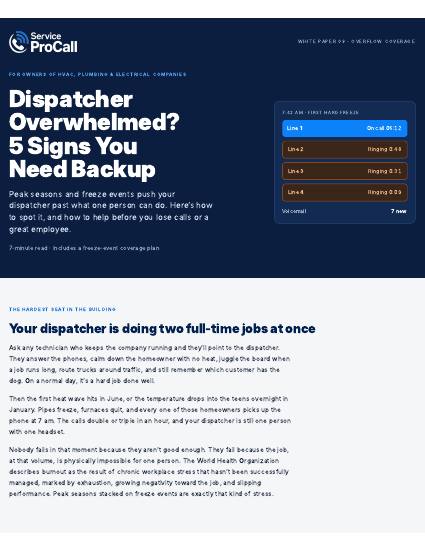
Dispatcher Overwhelmed?
Five signs your dispatcher needs backup.
Phones
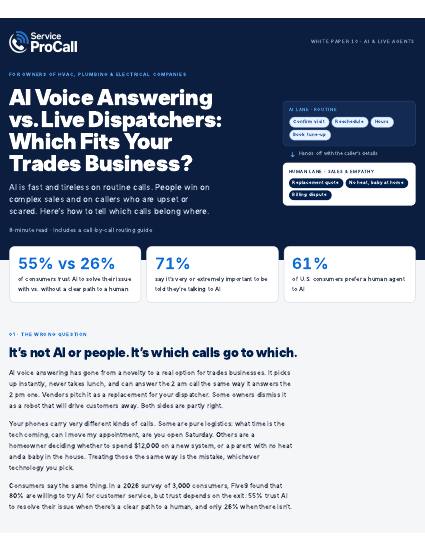
AI Voice Answering vs. Live Dispatchers
Which calls belong with AI and which need a person.
Read the PDF
Playbooks
The Equity Mining Playbook
The system for turning a dormant database into shown appointments.
Playbooks
The No-Charge Visit Playbook
Why homeowners say yes and how one visit in four pays for all.
Playbooks
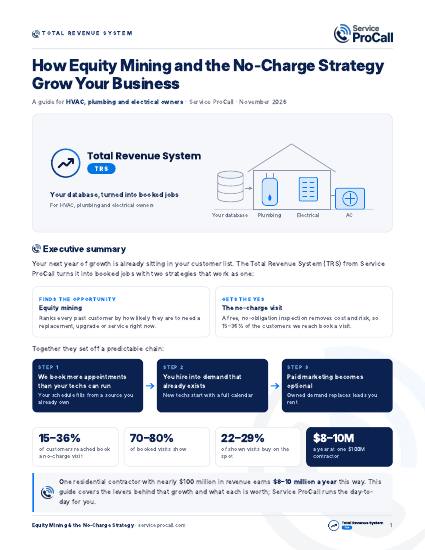
How Equity Mining and the No-Charge Strategy Grow Your Business
An owner guide to how the two strategies work together.
Want a copy sent over?
Tell us where to send it. A real person on our team will follow up.
Requesting: pick a paper above
Best practices
Best practices for the basics
Missed calls
Calls ring out at lunch, after 5 and on the first hot or cold day, and most of those callers don't call back.
- Measure your true answer rate by hour of day, not your gut feel. Most owners guess high.
- Cover the gaps on purpose: lunch, the first and last hour of the day, Saturdays and the first big weather day.
- Set an overflow rule: after a set number of rings or calls waiting, calls roll to a second person or an outside team.
Slow response to new leads
Web forms, ad leads and quote requests wait hours for a call back, and by then the homeowner has booked someone else.
- Send every lead source to one place, so nothing sits in an inbox.
- Call first, then text if there is no answer. Leave a short voicemail with a call-back number.
- Make three attempts in the first 48 hours, at different times of day.
Customers who never hear from you again
Thousands of past customers sit in your software. Their equipment ages, their plans lapse, and nobody calls them.
- Clean the list first: remove duplicates, fix phone numbers and mark do-not-call customers.
- Sort by what predicts a sale: equipment age, last visit and open repairs.
- Start with the warmest groups: lapsed members, recent repairs on old equipment and unsold estimates.
Unsold estimates
Techs give good options, the homeowner wants to think about it, and the estimate is never mentioned again.
- Leave every estimate in writing, with options and a monthly payment.
- Call within 48 hours, and ask what questions came up, not whether they are ready.
- Plan a short sequence: day 2, day 7, day 30, then seasonally.
Empty slots and the shoulder season
The board is full in peak season and thin in spring and fall, while payroll and trucks cost the same every month.
- Look at last year's board by week, and mark the soft weeks before they arrive.
- Start calling past customers four to six weeks before the slowdown.
- Book by area and time window, so trucks aren't crossing town.
No-shows and cancellations
The truck shows up and nobody is home, or the visit is cancelled the morning of.
- Read the booking back: date, window, address and phone number, in the homeowner's words.
- Tell them why the visit matters to them, not just when it is.
- Send a confirmation right away and a reminder the day before.